How to Choose the Right Hydro Cylinder for Your Needs?
Choosing the right Hydro Cylinder is crucial for efficient operations across various industries. According to the International Hydraulics Association, hydraulic systems account for approximately 20% of all mechanical systems worldwide. Hydro Cylinders play a significant role in these systems, converting hydraulic energy into linear motion. Selecting the proper cylinder ensures that your machinery operates at peak performance.
Different applications require specific cylinder types. For instance, construction machinery frequently uses heavy-duty Hydro Cylinders. These can withstand extreme conditions while providing reliability. A study from the Hydraulic Institute highlights that using an incorrect cylinder can lead to a 15% efficiency loss. This emphasizes the need for careful selection based on operational demands.
There are numerous factors to consider, such as pressure ratings and stroke length. Often, buyers overlook these essential details. Inadequate specifications can lead to equipment failure. Consequently, working with industry experts can significantly improve decision-making. Consult reliable sources and experienced professionals for tailored advice. Making informed choices about Hydro Cylinders is vital for maintaining productivity and safeguarding investments.
Understanding Hydro Cylinder Types and Applications
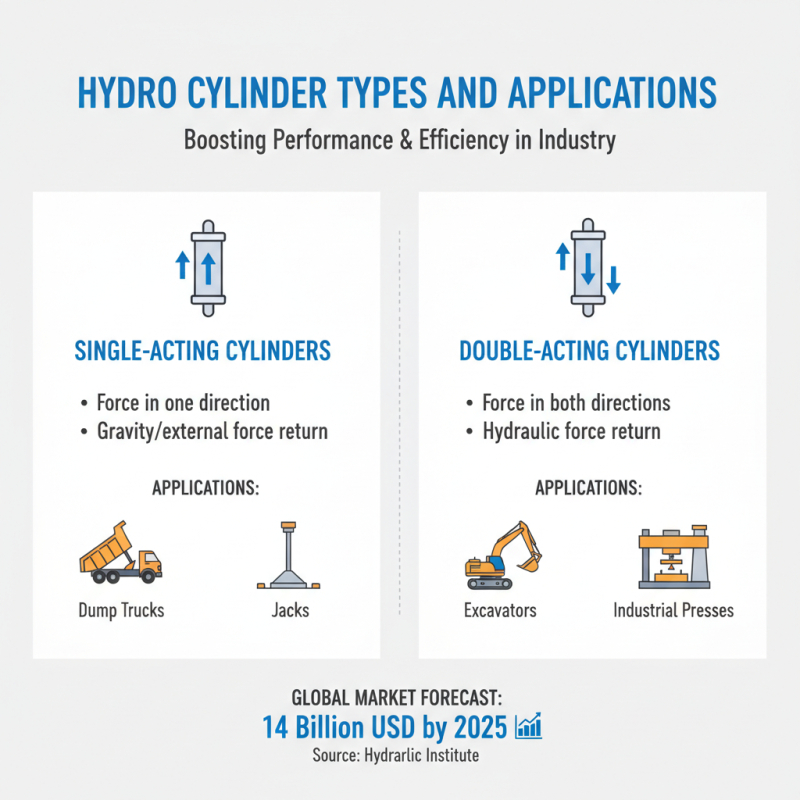
Hydro cylinders play a crucial role in various industries. Understanding different types can significantly impact performance and efficiency. There are two main types: single-acting and double-acting cylinders. Single-acting cylinders are efficient for tasks requiring force in one direction, while double-acting cylinders offer more flexibility. According to the Hydraulic Institute, the global market for hydraulic cylinders is expected to reach $14 billion by 2025, highlighting their necessity in industrial applications.
When selecting a hydro cylinder, consider the application requirements. Load capacity, stroke length, and working pressure are key factors. For instance, construction machinery often needs robust cylinders to handle heavy loads. A report from the International Fluid Power Society indicates that using improperly sized cylinders can reduce efficiency by up to 30%. This inefficiency can lead to increased operational costs over time.
Tip: Always consult technical charts and specifications. These documents provide essential information on compatibility and performance. Remember, mismatched components can lead to safety hazards. Additionally, re-evaluating the need for maintenance is vital. Regular inspections can prevent unexpected failures, ensuring your systems operate smoothly.
Assessing Load Requirements and Performance Expectations
Selecting the right hydro cylinder begins with understanding your load requirements and performance expectations. Load capacity is paramount. According to the International Hydraulics Organization, 70% of equipment failures stem from incorrect load assessments. Knowing the weight and dynamics of your load is crucial. Calculate total load, including static and dynamic forces. This gives a clearer picture of necessary cylinder specifications.
Performance expectations also influence your choice. Factors include speed, stroke length, and operating environment. For example, high-speed applications may require lighter cylinders with faster cycle rates. The National Fluid Power Association suggests that cycle efficiency can drop by up to 30% if these parameters are mismatched. Evaluate how your cylinder will operate under stress. By analyzing both load and performance, you can avoid costly mistakes.
Reflection on your specific application is key. Consider future needs too. Will your requirements change over time? Anticipating growth can enhance efficiency and save money. A mismatch between load needs and cylinder performance can lead to inefficiencies. Thus, detailed planning helps you avoid potential pitfalls in your hydraulic system design.
Evaluating Material and Design Considerations
When selecting a hydro cylinder, understanding the material and design is crucial. The choice of material affects the cylinder's strength and durability. Typically, steel and aluminum are popular options. According to industry reports, over 70% of hydro cylinders use alloy steel due to its superior tensile strength and resistance to corrosion. In contrast, aluminum cylinders are lighter, making them ideal for mobile applications. However, their lower load-bearing capacity can be a drawback.
Design considerations also play a pivotal role. Cylinder stroke length, bore size, and mounting options vary greatly. A mismatch can lead to inefficiencies. Research indicates that properly designed cylinders can enhance efficiency by up to 25%. Additionally, the environment adds complexity. For example, cylinders exposed to extreme temperatures require specific seals and materials to prevent failure. Choosing the wrong design can result in costly repairs and safety hazards.
It's also important to note the role of manufacturing quality. Not all manufacturers adhere to the same standards. A study shows that up to 30% of failures stem from poor manufacturing processes. Therefore, thoroughly evaluating potential suppliers is essential. Always weigh your choices carefully, as overlooking these details can lead to significant issues in operation.
How to Choose the Right Hydro Cylinder for Your Needs? - Evaluating Material and Design Considerations
| Cylinder Type |
Material |
Design Considerations |
Working Pressure (psi) |
Typical Applications |
| Double-Acting |
Steel |
Sealed for better efficiency |
2500 |
Excavators, Forklifts |
| Single-Acting |
Aluminum |
Lightweight design |
2000 |
Material handling, Agriculture |
| Tie Rod Cylinder |
Stainless Steel |
Corrosion-resistant, Durable |
3000 |
Marine, Waste management |
| Compact Cylinder |
Composite Material |
Space-saving design |
1500 |
Robotics, Automation |
Choosing the Right Size and Stroke Length
Selecting the appropriate size and stroke length for a hydro cylinder is crucial. The cylinder's size influences its capacity to handle loads. If the diameter is too small, it may struggle under pressure. A larger diameter generally means more force, but it may require more space, leading to a design dilemma.
Stroke length affects the cylinder's range of motion. A shorter stroke may suffice for less demanding applications. However, if the task requires extensive movement, a longer stroke is necessary. Buyers often overlook this detail, leading to inefficiencies. It is vital to analyze the specific needs of your application thoroughly.
Understanding your system’s requirements can be challenging. Consulting with experts can clarify these aspects. However, sometimes expert advice may not align perfectly with your project's unique needs. Therefore, it’s important to evaluate all factors carefully.
Balancing size and stroke length with your application can avert costly mistakes in the future.
Assessing Cost and Maintenance Factors
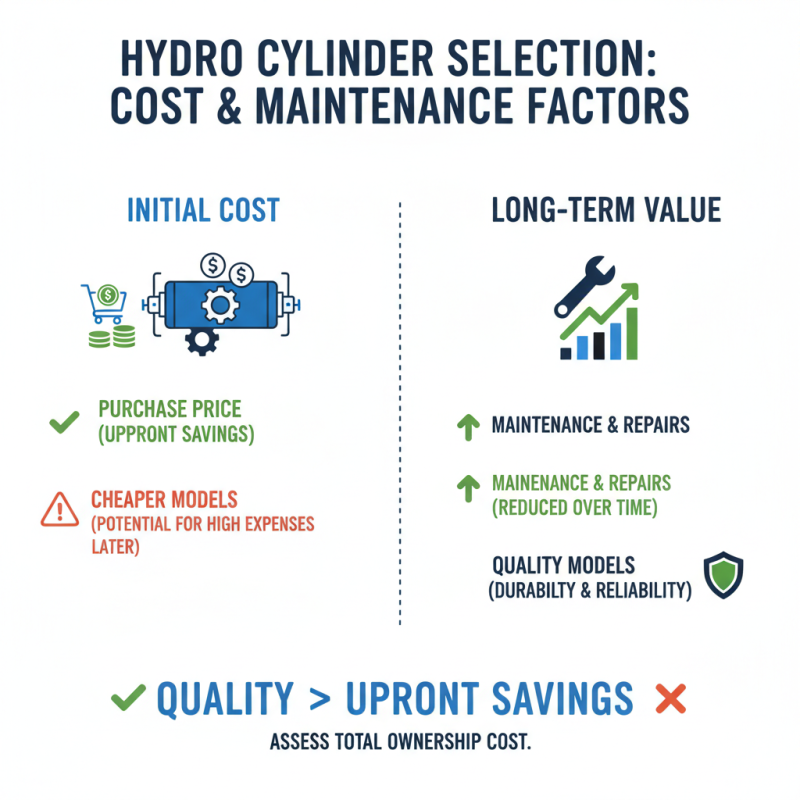
When selecting a hydro cylinder, cost and maintenance considerations play a crucial role. It's essential to assess both initial purchase price and long-term expenses. A cheaper model may save you money upfront, but higher maintenance costs could add up quickly. Opting for quality often yields better durability, leading to fewer repairs.
Maintenance practices can vary significantly between models. Some cylinders require regular oil checks and seal replacements. Others might need minimal upkeep, making them appealing for busy operators. Always evaluate the time and costs associated with maintenance tasks. Relying on detailed user manuals can help identify any hidden maintenance requirements, which could impact overall expenses.
Beyond just the financial aspect, one must consider the implications of poor choices. A wrong selection might lead to frequent breakdowns, causing operational delays. While it can be tempting to focus solely on cost, thinking about efficiency and reliability is crucial. Be prepared to reflect on your decisions and adapt based on real-world performance and feedback.

 +86-13349293098
 Contact WhatsApp
 Contact Email