+86-13349293098


Choosing hydraulic cylinders for international equipment is not a catalog exercise. It is a field decision. The wrong bore, rod, or seal can stop a machine beside a quarry, port, or remote farm. Replacement delays may cost more than the cylinder itself.
This guide examines the 2026 best Hol Mac Hydraulic Cylinders for global buyers. It considers rated pressure, stroke length, mounting style, rod diameter, seal materials, and operating temperature. These details matter. A cylinder lifting wet timber faces different demands from one steering a refuse truck. Buyers should also check oil compatibility, corrosion protection, spare-part access, and documented quality controls. Product drawings deserve careful review. Small mounting errors become expensive problems.
Hydraulic systems specialist Brendan Casey offers a useful reminder: “The best hydraulic system is the one that works reliably.” That principle fits Hol Mac Hydraulic Cylinders well. Strong steel is not enough. Correct sizing, clean fluid, proper alignment, and realistic duty calculations determine service life. Global buyers should request test data, warranty terms, and technical support before placing large orders. Local conditions can expose weaknesses quickly. Dust enters. Temperatures change. Operators sometimes exceed recommended loads.
There is no perfect cylinder for every application. That needs saying. A model praised in North America may require different seals or coatings in tropical, coastal, or high-altitude service. This overview compares practical options without treating every specification as universal. It also leaves room for doubt, because real equipment behavior can differ from laboratory results. Expect useful guidance, not magic.
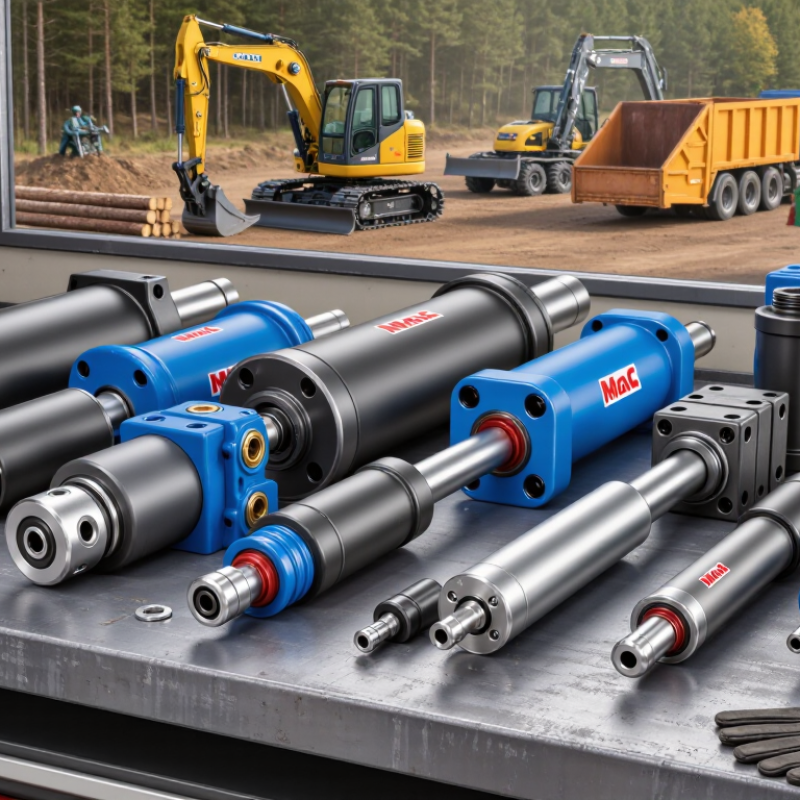
For 2026 global sourcing, cylinder selection should begin with standards, not price. ISO 6020/2 covers medium-duty hydraulic cylinders, commonly rated at 160 bar. ISO 6022 targets heavy-duty applications, commonly rated at 250 bar. Peak pressure needs separate confirmation. Never infer it from nominal pressure. Bore, rod diameter, stroke, mounting, and cushioning must match the machine’s load cycle. A 100 mm bore at 160 bar produces about 126 kN theoretically. Actual force is lower after friction and pressure losses.
Grand View Research estimated the global hydraulic cylinder market at about USD 14.4 billion in 2023, with a projected 4.5% CAGR through 2030. Fortune Business Insights reported a different 2023 estimate, around USD 15.56 billion. The gap is useful. Market reports use different definitions and research methods. Buyers should check each report’s scope before trusting a forecast.
For ISO 6020/2 or ISO 6022 orders, request pressure-test records, material certificates, seal compatibility data, and dimensional drawings. Confirm fluid type, ambient temperature, corrosion exposure, and side-load risks.
In field inspections, small alignment errors often create rod scoring and seal leakage. It happens quietly. Metric threads and ports also need verification across regions. A cylinder may meet ISO dimensions but still fail a real duty cycle. That is where many purchasing guides oversimplify. Load calculations should include acceleration, shock, and fatigue, not only static force. Human review remains necessary.
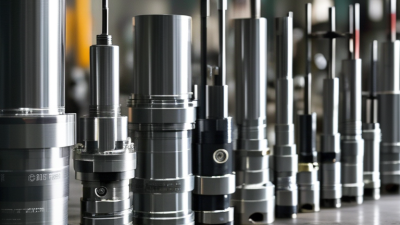
For 2026 global buyers, hydraulic cylinder selection should begin with duty conditions, not catalogue appearance. Common designs include single-acting, double-acting, telescopic, tie-rod, and welded cylinders. Standard bore choices often range from 40 to 200 mm, with 63, 80, 100, and 125 mm frequently used in mobile and industrial equipment. ISO 6020/2 commonly supports 160-bar working pressure, while ISO 6022 covers heavier 250-bar applications.
The 100–350 bar range needs careful interpretation. A 100 mm bore produces approximately 196 kN at 250 bar, before efficiency losses. At 350 bar, seal wear, rod buckling, mounting stress, and oil temperature become more demanding. A larger bore increases force, but it also increases mass and flow requirements. Bigger is not always better. That mistake still appears in real procurement projects.
The Global Hydraulic Cylinder Market Report by Research and Markets forecasts continued market expansion through 2028, supported by construction, agriculture, and material-handling demand. Such growth does not remove engineering risk. Buyers should request pressure-test records, material certificates, seal specifications, and fatigue data. Confirm whether the stated rating means continuous working pressure, test pressure, or short-term peak pressure. A 160-bar cylinder may tolerate a brief spike, but that does not make it a 250-bar cylinder. Bore tolerance and rod finish also deserve inspection; small deviations can become costly under repeated cycles.
For global buyers, hydraulic cylinder comparison should begin with real load conditions, not catalog force. Calculate force as pressure multiplied by piston area, then allow for side loads, shock, friction, and a safety margin. A 100 mm bore at 160 bar produces about 126 kN theoretically. Actual output is lower. Grand View Research estimated the global hydraulic cylinders market at over USD 14 billion in 2023, showing why standardized, evidence-based selection matters.
Stroke length affects machine travel, installation space, and buckling risk. Measure the complete motion, including end clearances and mounting angles. A long stroke may require a larger rod diameter or external guidance. ISO 4413 stresses risk control, pressure management, and proper system design. Buyers should request rated pressure, tested cycle life, rod material, and dimensional tolerances. A polished datasheet is not enough.
Sealing systems deserve closer inspection. Choose seal materials for fluid type, temperature, contamination, and cycling speed. Polyurethane seals often suit demanding wear conditions, while fluorocarbon materials can handle higher temperatures, but neither choice is universal. The U.S. Department of Energy reports that hydraulic systems can lose significant energy through throttling, leakage, and poor maintenance. Specify measured leakage rates and efficiency at working pressure. A spreadsheet can still mislead. Compare test conditions, not only percentages. Recheck the result against actual duty cycles, because laboratory efficiency may not match dusty sites, cold starts, or uneven loads.
Comparison of representative hydraulic-cylinder configurations by load capacity, stroke length, sealing system, and estimated efficiency.
Load capacity is calculated from piston bore area at a reference pressure of 250 bar: force = pressure × piston area. The figures are representative engineering values rather than brand-specific ratings. Bubble size indicates estimated hydraulic-to-force efficiency, while sealing systems reflect commonly used configurations for general, low-friction, high-temperature, and heavy-duty applications.
For 2026 hydraulic-cylinder sourcing, material evidence matters more than polished catalog photos. Check the steel grade, tube hardness, rod surface treatment, seal compound, and traceable heat numbers. A cylinder may look robust, yet a poorly finished rod can damage seals after repeated dusty cycles. Ask for dimensional inspection records, not only a factory statement. This small step often exposes weak quality control.
ISO 9001 is useful, but certification alone proves little about one cylinder. The ISO Survey 2023 recorded 1,265,216 ISO 9001 certificates worldwide, showing broad adoption of the system. It does not guarantee perfect production. Request the certificate scope, audit status, calibration records, and corrective-action samples. ISO 10100 provides a practical reference for hydraulic-cylinder acceptance testing, including leakage and performance checks. Require test pressure, holding time, load conditions, and actual results.
CE marking needs careful review. A cylinder is not automatically CE-marked merely because a supplier prints a logo. Applicability depends on the finished machine and relevant European requirements. Request a Declaration of Conformity when applicable, plus risk-assessment and technical-file support from the responsible manufacturer. Confirm serial-number traceability and independent test records. Ask difficult questions. Silence is also data. Many buyers overlook installation alignment, oil cleanliness, and side loading during acceptance testing; these omissions can invalidate otherwise convincing laboratory results.
Selecting hydraulic cylinders for global equipment requires more than matching bore and stroke. Corrosion protection often determines real service life.
In coastal yards, salt spray can attack rod surfaces within weeks. Choose induction-hardened rods with a suitable chrome or nickel coating. Specify sealed wipers, protected ports, and paint systems rated for the operating environment.
Field inspections show that maintenance habits matter as much as cylinder design. Wipe exposed rods after muddy shifts. Check oil contamination, seal leakage, and mounting alignment every 250 operating hours. Misalignment creates side loading, which can damage seals before the cylinder reaches its expected cycle count. Service life is never guaranteed.
It rarely is.
Compare the complete cost, not only the purchase price. A lower-cost cylinder may require earlier seal replacement, difficult shipping, or special installation tools.
Request test records, material specifications, spare-seal prices, and regional support details. Warranty terms should state coverage duration, excluded damage, inspection procedures, and response times. Clarify whether labor, freight, and replacement parts are included.
These details prevent costly arguments later. A practical buyer should also allow for uncertainty. Actual loads, weather, operator habits, and neglected filtration can reduce performance, even when the original selection looked correct.