How to Choose the Right Swing Bearing for Your Project?
Choosing the right swing bearing for your project is vital. As industry expert Jack Thompson stated, “The selection of a swing bearing directly impacts your machinery's efficiency.” His insight underscores the importance of making informed decisions.
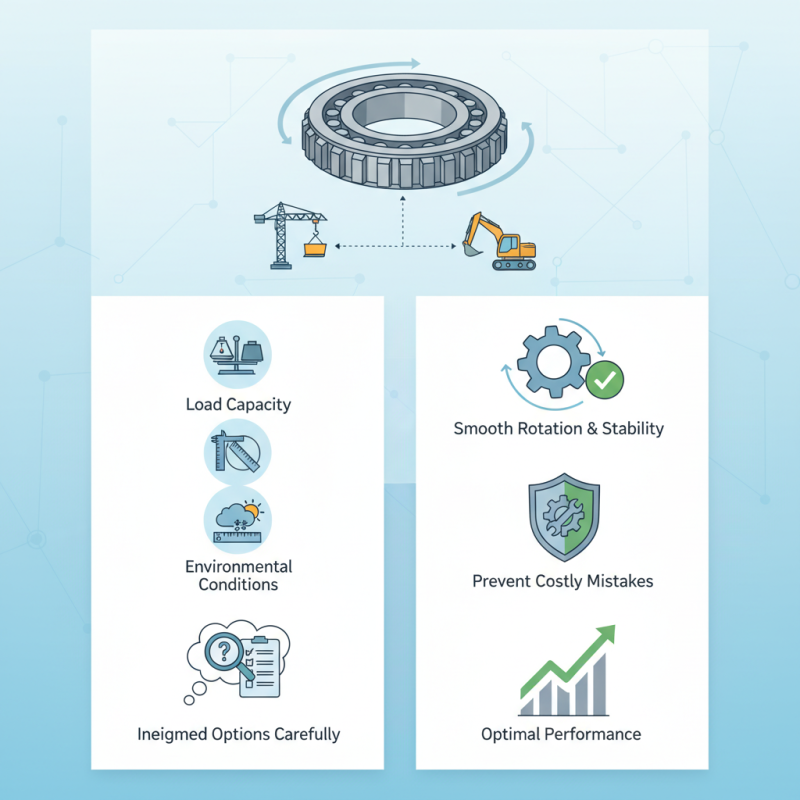
Swing bearings play a crucial role in various machines, from cranes to excavators. The right bearing ensures smooth rotation and stability. Consider factors like load capacity, size, and environmental conditions. Each project is unique, and your choices reflect that uniqueness.
Some may overlook the specifics. For instance, neglecting to assess the working environment could lead to early failures or suboptimal performance. It’s essential to weigh all options carefully. This thoughtful approach can prevent costly mistakes in the long run.
Understanding the Basics of Swing Bearings and Their Applications
Swing bearings play a crucial role in various applications, especially in heavy machinery and construction equipment. They allow for smooth rotational movement and can support significant loads. Understanding their structure is essential. A swing bearing typically consists of an inner ring, outer ring, and rolling elements. These components work together to facilitate motion while distributing weight evenly.
Applications of swing bearings extend across industries. They are commonly found in excavators, cranes, and mobile equipment. The choice of material can greatly influence performance. For instance, stainless steel offers corrosion resistance, while hardened steel provides enhanced durability. Despite this, imperfections can arise during installation, leading to premature wear. It’s important to regularly inspect the bearings for signs of damage.
Selecting the right swing bearing involves various factors. Load capacity, environmental conditions, and maintenance requirements should be considered. Criteria for evaluation may seem straightforward, yet many overlook specific details. For example, ensuring proper lubrication is vital for maximizing lifespan, but many operators neglect this aspect. Reflecting on these elements can lead to better project outcomes.
Identifying Key Factors for Selecting the Right Swing Bearing
Choosing the right swing bearing for your project involves several critical factors. One key aspect to consider is the operating environment. Dust, moisture, and temperature fluctuations can significantly impact bearing performance. A study by the Manufacturing Technology Association found that bearings used in harsh conditions can reduce lifespan by up to 30%. Thus, knowing the environmental factors can guide your selection process.
Another essential factor is the load capacity. Assess both static and dynamic loads expected during operation. Data from the International Organization for Standardization indicates that a 10% underestimation of load can lead to premature failure. This underlines the importance of accurate calculations. Moreover, the specific application dictates the design requirements. It is crucial to reflect on your project needs thoroughly. Failure to do this often leads to misalignment and inefficiencies, pointing to the need for careful consideration.
Bearings should also be evaluated for maintenance requirements. Some designs offer reduced maintenance, which can save time and costs. However, these may come with higher initial costs. Balancing long-term benefits versus upfront investments can be challenging. Reflecting on these aspects during the selection process can lead to better operational performance.
Evaluating Load Capacity and Performance Requirements
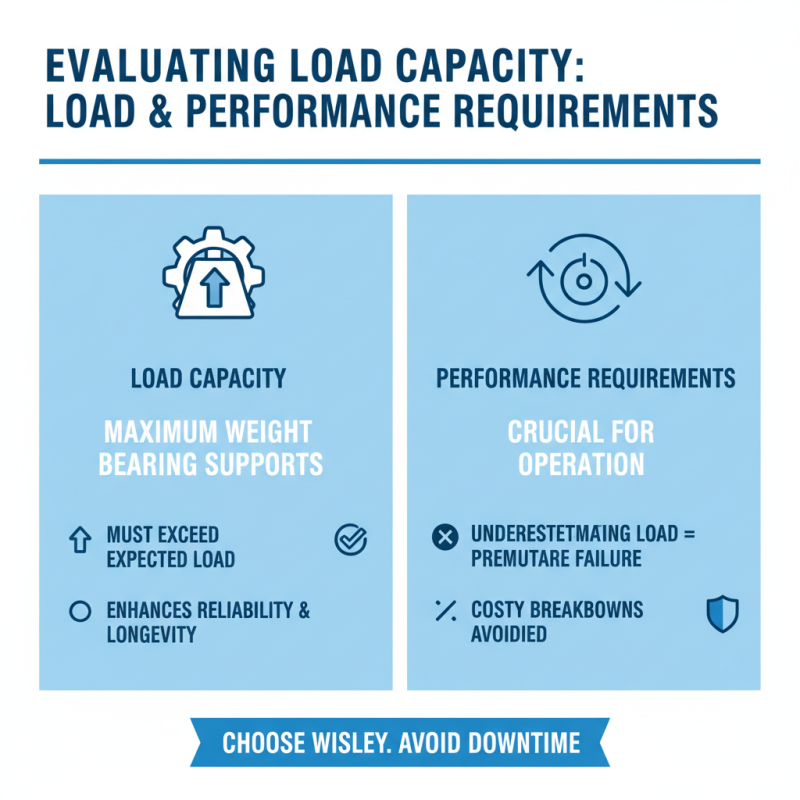
When selecting a swing bearing, evaluating load capacity and performance requirements is crucial. Load capacity refers to the maximum weight the bearing can support during operation. Ideally, the chosen bearing should exceed the expected load to ensure reliability and longevity. Underestimating this can lead to premature failure or costly breakdowns.
Performance requirements also play a vital role. Consider factors such as rotational speed, environmental conditions, and installation space. For example, if your project involves high-speed operations, the bearing’s friction and wear characteristics become critical. Similarly, if it operates in extreme temperatures, ensure the materials can withstand those conditions.
Balancing load capacity with performance needs can be challenging. Some projects may require high load capacity but compromise on speed. Others may prioritize speed over weight tolerance, leading to wear and tear issues. It’s essential to reflect on these trade-offs early in your project, as they can significantly impact overall efficiency and functionality. Design choices made during this phase echo throughout the product lifecycle.
Comparing Material Options for Durability and Functionality
When selecting a swing bearing, material choice is crucial for durability and functionality. Common materials include stainless steel, bronze, and engineering plastics. Each has unique properties that affect performance. According to a report by the Machinery Research Institute, stainless steel offers corrosion resistance, making it ideal for outdoor applications. It can withstand severe weather conditions, therefore enhancing longevity.
In contrast, bronze bearings are renowned for their low-friction characteristics. With a lifespan that often exceeds 50% of other materials, they excel in applications with high load and speed. However, bronze can corrode in salty environments, a factor to consider. The American Society of Mechanical Engineers (ASME) states that the right choice reduces downtime by 30%. This statistic emphasizes the importance of proper material selection for efficient operation.
Engineering plastics, like PEEK (Polyetheretherketone), are increasingly popular. They combine lightweight properties with exceptional wear resistance. Reports highlight their performance in temperature extremes. Nevertheless, they may not handle high loads as well as metals. Choosing the right swing bearing material is not just about current needs. Anticipating future demands is essential for optimal project success.
Assessing Installation and Maintenance Considerations for Swing Bearings
When considering swing bearings, installation and maintenance are critical factors. Selecting the right swing bearing ensures longevity and optimal performance. Proper installation begins with surface preparation. Ensure the mounting surfaces are clean and free from debris. Misalignment can lead to premature wear.
Once installed, regular maintenance is key. Check for lubrication and inspect for any signs of wear or damage. Some bearings may require periodic greasing, while others rely on self-lubrication. Not every project will have the same requirements, and it’s vital to stay informed. Failing to perform routine checks might lead to unforeseen issues affecting performance.
Environmental conditions can also impact maintenance needs. Dust or moisture in the environment could necessitate more frequent inspections. Identifying these factors early helps to keep projects on track. Always document maintenance activities to assess patterns and make informed decisions moving forward.
How to Choose the Right Swing Bearing for Your Project? - Assessing Installation and Maintenance Considerations for Swing Bearings
| Dimension |
Material |
Load Capacity (kN) |
Operating Temperature (°C) |
Maintenance Frequency |
| 200 mm |
Steel |
50 |
-20 to 80 |
Annually |
| 300 mm |
Stainless Steel |
70 |
-30 to 90 |
Semi-Annually |
| 400 mm |
Aluminum |
80 |
-10 to 70 |
Quarterly |
| 500 mm |
Composite |
100 |
-40 to 100 |
Monthly |

 +86-13349293098
 Contact WhatsApp
 Contact Email