How to Choose the Best Slewing Ring for Your Project?
Choosing the right Slewing Ring for your project is crucial. As industry expert John Smith once stated, “The right slewing ring can make or break your engineering project.” This highlights the significance of understanding various factors before making a selection.
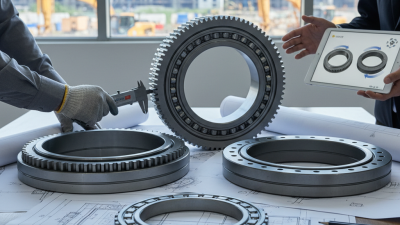
Slewing Rings are essential components in many applications, from construction machinery to renewable energy systems. Their design directly influences stability and performance. Selecting an appropriate slewing ring involves analyzing load capacities, material types, and installation requirements. Each project demands unique specifications, and some common oversights can lead to issues down the line.
Project managers and engineers often overlook the importance of compatibility. A mismatched slewing ring may lead to early wear or failure. Taking time to research and consult experts can prevent costly mistakes. As you navigate the selection process, remember that knowledge is your best tool in ensuring your project’s success.
Understanding Slewing Rings: Definitions and Applications
Slewing rings are crucial components in a variety of applications. They facilitate smooth rotation in machinery. Commonly found in cranes, excavators, and wind turbines, they help support heavy loads and maintain stability. According to industry reports, the slewing ring market has been expanding, projected to grow at a CAGR of 5% from 2021 to 2026. This growth underscores the increasing reliance on these components in various sectors.
Understanding the specific needs of your project is essential. A slewing ring's size, load capacity, and lubrication type are vital factors to consider. For instance, high-load applications might necessitate larger diameters and robust materials. However, some projects may overlook these details, leading to equipment failure. An example of this is miscalculating load requirements, which can lead to premature wear and increased maintenance costs.
Materials also play a significant role in performance. Stainless steel rings offer corrosion resistance, but may not be necessary in all environments. This could result in unnecessary expenses for projects that don't operate in harsh conditions. Evaluating the operating environment is key to selecting the right slewing ring. Awareness of these factors will help ensure durability and reliability in your equipment.
Comparative Analysis of Slewing Ring Applications
Key Factors to Consider When Selecting a Slewing Ring
Choosing the best slewing ring for your project involves several critical factors. First, consider load capacity. Slewing rings should support the weight of the equipment they will rotate. According to industry reports, the load capacity can vary significantly, with some rings supporting up to 200 tons. Always verify that the slewing ring meets your specific requirements to avoid premature failure.
Next, pay attention to the operating environment. Harsh conditions, such as exposure to dust or humidity, can affect performance. A study by the International Bearing Company highlighted that moisture can reduce bearing life by 40%. Selecting a slewing ring designed for adverse conditions can enhance durability.
The precision of the slewing ring is another key factor. Some applications demand tight tolerances, especially in robotics or aerospace systems. An accurate slewing ring reduces the risk of operational issues. Industry standards indicate that precision can greatly impact performance efficiency, with inaccuracies leading to costly downtimes. Remember, it's essential to balance cost and quality to ensure long-term reliability in your projects.
How to Choose the Best Slewing Ring for Your Project? - Key Factors to Consider When Selecting a Slewing Ring
| Factor |
Description |
Importance Level |
| Load Capacity |
The maximum load that the slewing ring can handle without failure. |
High |
| Size & Dimensions |
Physical dimensions that fit your application space. |
Medium |
| Material |
The material affects durability, weight, and corrosion resistance. |
High |
| Application Type |
The specific use-case and operational requirements dictate the slewing ring choice. |
High |
| Precision |
The degree of accuracy needed for positioning. |
Medium |
| Cost |
Total investment required, including purchase and maintenance. |
High |
| Supplier Reliability |
The history and reputation of the supplier in the market. |
Medium |
Material Choices for Slewing Rings: Steel vs. Other Options
When selecting a slewing ring, material choice is crucial. Steel is a popular option due to its strength and durability. It can withstand heavy loads and resist wear over time. However, it is also heavier, which may not be ideal for all applications.
Alternative materials like aluminum and composite materials offer different benefits. Aluminum is lightweight and corrosion-resistant, making it suitable for specific environments. Composites provide excellent shock absorption and are often lighter than metal options. This can help improve overall machine efficiency.
Choosing the right material requires careful consideration. While steel may seem reliable, its weight may pose challenges in some projects. Understanding the specific needs of your project will guide you in selecting the best slewing ring. Testing different materials and analyzing their performance can lead to better decisions. Balancing cost with performance is no easy feat. Each project has unique demands that deserve thorough evaluation.
Determining Load Requirements for Your Slewing Ring
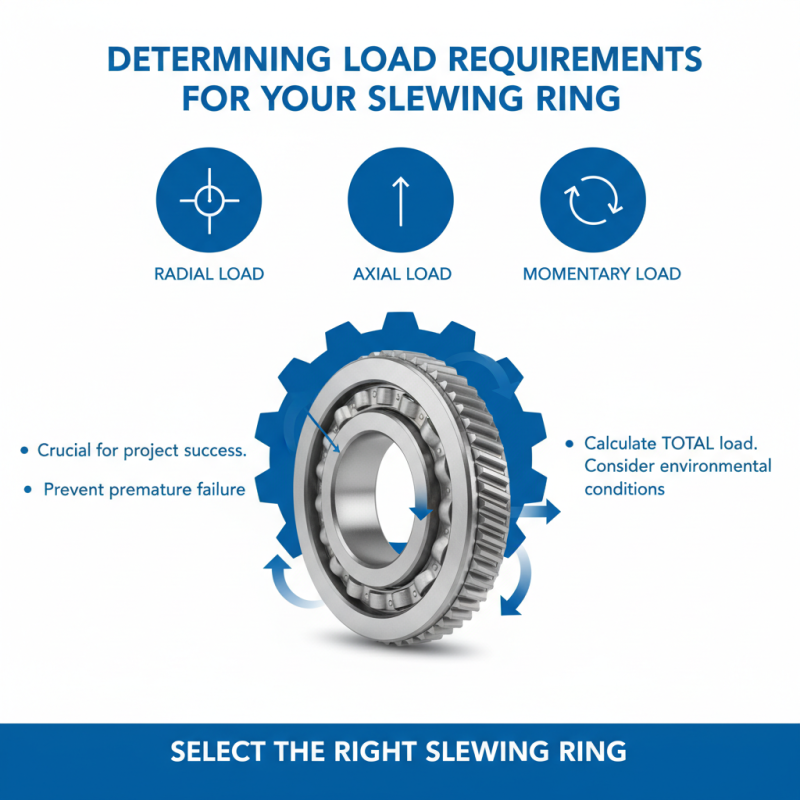
When selecting a slewing ring for your project, understanding load requirements is crucial. These rings are designed to handle specific loads and environmental conditions. According to industry reports, slewing rings are often subjected to radial, axial, and moment loads. It's essential to calculate the total load accurately to prevent premature failure.
Load requirements vary widely depending on the application. For example, construction machinery may require slewing rings that can handle heavy loads over rough terrain. In contrast, robotic applications often need lightweight alternatives. A study indicates that 60% of failures in slewing rings result from miscalculating load specifications. Knowing your exact specifications empowers engineers to make informed decisions.
**Tip:** Always consider peak loads. This ensures the slewing ring can handle unexpected stress. Adjust specifications based on the loading cycles to enhance durability.
Another key factor is environmental conditions. High temperatures, humidity, or contaminants can change load dynamics. A well-designed slewing ring should accommodate these variables. This flexibility helps ensure long-term operational reliability.
**Tip:** Regularly inspect the ring for wear and tear. Early detection of issues can save time and reduce costs.
Maintenance Tips for Optimal Performance of Slewing Rings
Slewing rings play a vital role in various applications, from cranes to wind turbines. Proper maintenance ensures these components perform optimally and last longer. Regular inspections can reveal early signs of wear or damage. Checking for corrosion is essential, as it can compromise the ring's integrity. Lubrication should be on your routine checklist. Use the right type of grease for your application, and ensure it's applied evenly.
Environmental factors can affect slewing rings. Dust and debris can lead to premature failure. Keeping the working area clean is crucial. When operating in harsh conditions, replacement frequency might increase. Operators should be trained to identify issues early. Simple visual checks can make a significant difference.
Another common oversight is ignoring the manufacturer's guidelines on load capacity. Exceeding this limit can lead to failures. Regularly reviewing the operating conditions helps in maintaining the slewing ring’s performance. Consider having a maintenance schedule to ensure consistency. With a little more diligence, you can avoid costly repairs down the line.

 +86-13349293098
 Contact WhatsApp
 Contact Email